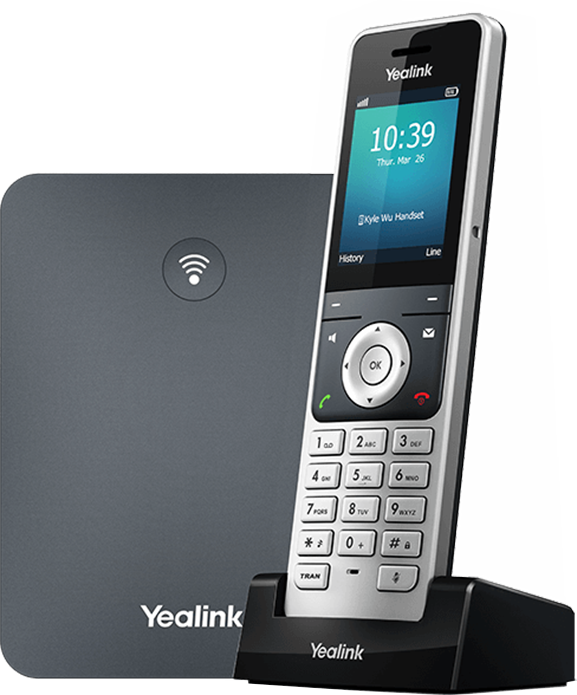
You started your business with ambition, a laptop, and your mobile phone doubling as your business number. For a while, nobody questioned it. But somewhere between your tenth missed call during a client meeting and your hundredth text message sent from your personal number, the cracks started to show. Business communications for entrepreneurs is not a nice-to-have item on a future to-do list. It is the foundation that makes your business look and run like an actual business. Consider what happens when a potential client calls and reaches your personal voicemail greeting instead of a professional business message. Or when a colleague needs to handle a customer call and has no business number to give out. These are not edge cases. They are the daily friction that comes with running a business through a personal phone, and they compound quietly until they become a real problem.
What Actually Changes When You Upgrade
Moving from your personal mobile to a dedicated business phone system is not a technology change. It is a business maturity change. Every caller now reaches a professional greeting instead of your personal voicemail. Calls route to the right person automatically. Your whole team shares one business number, even if they are working from different locations on different devices.
There is also a compliance dimension worth knowing. Under the Australian Privacy Principles, your business must handle customer personal information responsibly. When business conversations happen on personal devices, with personal accounts and personal cloud backups, that compliance line gets blurry fast. A dedicated business phone system keeps your work calls, records, and messages inside your business infrastructure. Your private life stays private.
None of this requires expensive hardware, a server room, or a technical team. Modern business phone systems, like that from SIPcity, are entirely cloud-based. You sign up, choose your number, download an app, and you are operational in the same day.
The Features Worth Paying For
When you are evaluating business phone systems, ignore the brochure feature count. Focus instead on what each feature actually does for your day, your team, and your customers – every business is different.
Business Communications for Entrepreneurs: Must-Haves
- An auto-attendant answers your calls with a professional greeting and routes callers to the right person or department. It costs nothing extra on most plans and immediately makes your business sound established, whether you have two staff or twenty. “Press 1 for sales, press 2 for support” works as well for a startup as it does for a 200-person team. Or have just a professional Welcome message which just adds to your professional image.
- Shared SMS lets your business number send and receive text messages through a shared team inbox. Every message is logged and visible to your whole team. No customer falls through the cracks when someone is on leave or in a meeting, and no single person owns all the customer conversations.
- Call recording is not just for large call centres. For a young business, recorded calls are a coaching tool, a dispute resolution record, and a quality assurance check rolled into one.
- A mobile app is the feature that changes daily life. Your business number rings on your personal smartphone through the app. Customers see your business number. You never share your personal number. And when a staff member eventually moves on, the number stays with the business, not with them.
At SIPcity, all of these features are included as standard across our business phone plans, because we know they are the ones that drive real day-to-day value, not ones that sound impressive in a product sheet.
Business Communications for Entrepreneurs: Choosing the Right Provider
Choosing the right provider matters as much as choosing the right features. These are the questions worth asking before you commit to anything.
- Are they Australian-owned and Australian-based? When something goes wrong, you need to speak to someone in your timezone who understands Australian telecommunications regulations, not lodge a support ticket with an offshore team.
- Do they run on Australian infrastructure? Some providers route your calls through overseas servers. That adds unnecessary latency and introduces data handling risks that matter under Australian privacy law.
- Do they offer month-to-month plans? Avoid any provider asking you to commit for 24 or 36 months. Your business will change in that time. Your phone system should change with it, not work against it.
- Do they have a specialist porting team? Porting your existing phone number to a new provider is where migrations most often go wrong. A specialist team manages this properly, including the more complex cases where numbers are bundled to NBN internet services and need to be disassociated before they can move. Our article on running a business phone system over your internet connection covers how this works in practice.
- Do they work with businesses like yours? Some providers focus on enterprise clients and treat small businesses as an afterthought. Look for a provider who is B2B-only and genuinely oriented toward your scale of operation.
For practical guidance on your rights around telecommunications contracts as a small business, the Australian Small Business and Family Enterprise Ombudsman (ASBFEO) publishes useful resources worth reading before you sign anything.
Making the Switch Is Simpler Than You Think
The biggest barrier to upgrading is the assumption that it will be disruptive. In practice, moving to a business phone system is one of the simpler technology changes you will make as an entrepreneur.
There is no hardware to install, no technician visits, and no downtime on your existing number. A reputable provider ports your current number across for you. Porting your mobile number can be done the same day. The process typically takes a few business days in Australia, and your customers will never notice the change. They simply keep calling the number they already know.
Start by listing what your current setup actually costs: your mobile plan, any separate line charges, and the less obvious cost of missed calls and unprofessional first impressions. Then define what you actually need. How many team members need extensions? Do your customers need a local geographic number or a national 1300 number? Which features match your current call volume?
According to the Australian Bureau of Statistics, there were nearly 2.73 million actively trading businesses in Australia as of June 2025, with the overwhelming majority being small. Getting business communications for entrepreneurs right early is far easier than fixing a patchwork setup later, once clients, staff, and habits are already embedded in the wrong system.
Ready to Move Beyond the Mobile?
A proper business phone system does not require a large budget, technical expertise, or a long-term contract. It requires choosing the right provider and spending an hour on setup.
At SIPcity, we work exclusively with Australian businesses. We own our infrastructure, we run our systems on Australian soil, we have a dedicated porting team, and we do not lock you into contracts. Whether your team is two people or twenty, we can have your business number, auto-attendant, shared SMS, and mobile app running quickly and without fuss.
If you are ready to make the move, get in touch with the SIPcity team. A short conversation is all it takes to work out exactly what your business needs right now.