Two staff, one work phone, driven across town at every shift change like it contains state secrets. There is a grown-up version of "who has the phone today", and it doesn't involve a car.
By
Dot Johnstone
Here’s a quote from a new SIPcity customer who called today.
“I have two employees who work from home on different days. They currently have to drive the work phone across town to each other based on whoever is working.”
It is completely sensible to start a business with your own mobile. It gets you moving right? You answer calls, send texts, make appointments and keep things simple. At the start, it’s practical. But once you need to grow and hire people, the same setup can become ridiculous very quickly.That is the moment you know it is time to replace your mobile phone for business and get something a little more scalable. Not because the mobile was a bad idea. It did its job. But your business has outgrown it.
One handset cannot sensibly represent a growing business, support remote staff, hold customer SMS conversations, manage missed calls and follow whoever happens to be rostered that day. That is not a phone system, it’s communication chaos.
The mobile was useful, then it became a bottleneck
Most small businesses don’t start with a polished phone system. They start with a person, a mobile number and the mild terror of hoping the phone rings. That is normal. Nobody opens a business and immediately thinks, “Excellent, I must design a call routing strategy.” If they do, check on them.
The mobile works because it is immediate. It is cheap, familiar and already in your hand. And, it’s all you know. Customers can call you. Suppliers can text you. You can put the number on your website, Google Business Profile, invoices, vans, signs and emails.
However, the same strength becomes the problem. The number is attached to one device. The device is attached to one person – you! Once more than one person needs to handle customers, the whole arrangement starts to wobble.
The issue is not the handset. The issue is ownership. A mobile phone belongs to the person holding it. A business number should belong to the business.
Remote work makes the old setup sillier
Remote work is now normal parts of Australian business. So many small businesses, especially the trades and care workers, have teams of people on the road and not bound to an office.
If one person works from home on Monday and another on Tuesday, the answer is not “please chauffeur the phone to Jessica”. Jess has enough to do. She doesn’t need to become a courier for the office iPhone.
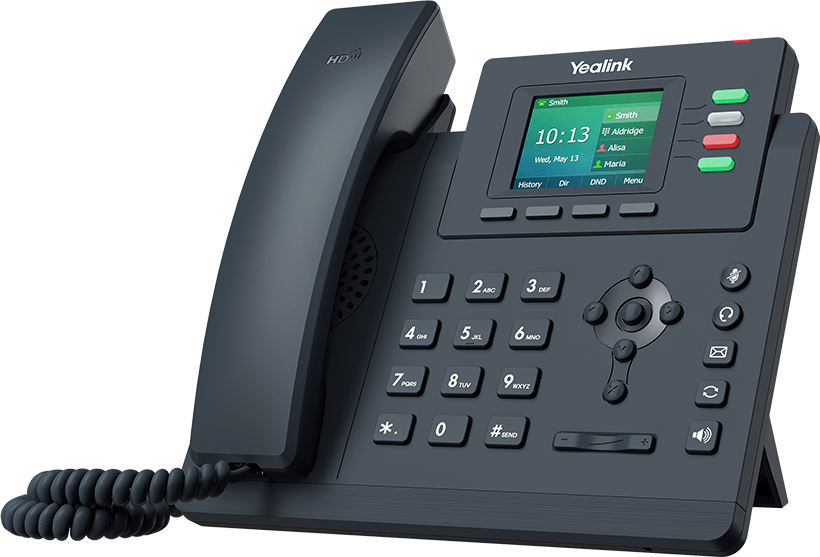
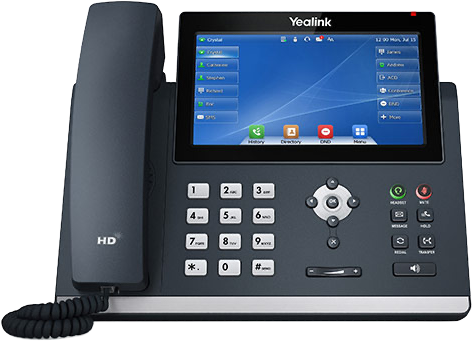
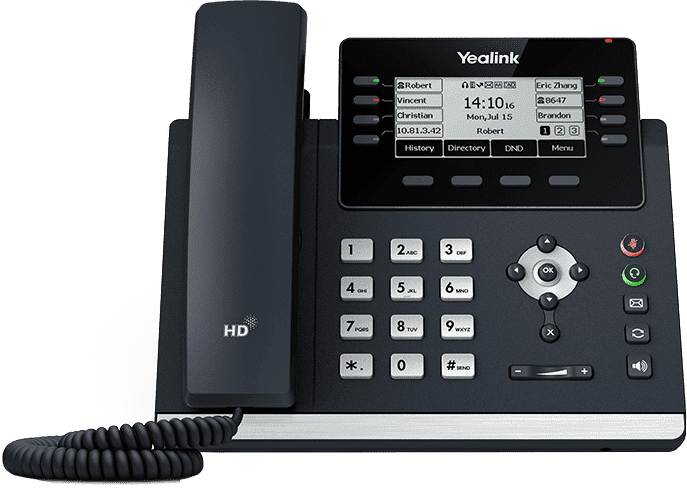
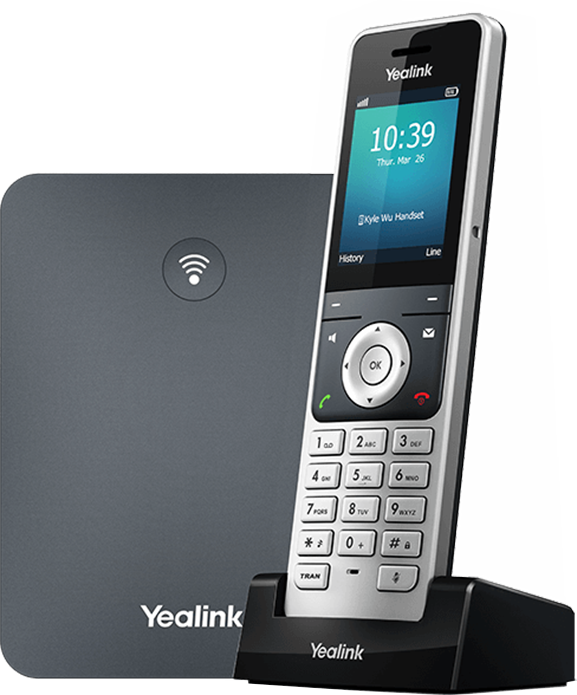
A proper Hosted Phone System lets calls ring through to the right person, wherever that person is. Staff can use a desk phone, browser, mobile app or softphone. The customer calls one business number. Your team answers as the business.
Nobody needs to meet in a car park like a spy film written by the stationery department.
This is where a business phone system earns its keep. Not by sounding impressive, but by removing stupid friction.
Replace your mobile phone for business before it costs you
Missed calls are not harmless. A customer who cannot reach you may not leave a voicemail. They may not text twice. They may simply call the next business listed below you. Very democratic. Also brutal.
When all calls land on one mobile, you get predictable failures:
Calls ring while the phone is with the wrong person.
Voicemails sit unheard until someone remembers.
SMS replies live on one device, not in a team inbox.
Staff use personal mobiles, which blurs work and private life.
Customers start depending on individuals instead of the business.
That last one is the quiet killer. If a staff member leaves, becomes unavailable, or changes role, your customer relationship should not leave with them. A business number should stay with the business. It should have routing, permissions, reporting and a clean handover path.
So yes, you should replace your mobile phone for business before the cracks appear in public.
Cloud Phone System (PBX) is not just for big companies
Some business owners still hear “PBX” and picture a beige box in a cupboard, humming like it knows too much. That version can stay in the museum, next to fax toner and the phrase “circle back”. Or they simply have no idea what it even is, or how to ask for a business phone system.
A modern Cloud PBX gives small teams the same practical controls larger companies use, without needing a technician to perform a ritual over copper wires. With SIPcity’s Switchboard, you can manage call routing, extensions, auto attendants, voicemail and call flows from a browser.
For a growing business, that means you can set sensible rules. Sales calls can ring the sales team. Support calls can go to support. After-hours callers can hear a message, leave a voicemail, or route to an emergency contact.
You can also add people without rebuilding the phone system. That matters when the business changes. And it will change, usually just after you thought everything was finally tidy.
Shared SMS fixes the other half of the mess
Phone calls are only part of the story. Many customers now prefer text for appointment reminders, quick updates, order notes and “I am outside” messages. That is fine, provided the SMS thread is not trapped on one mobile sitting in someone’s kitchen.
SIPcity’s Shared SMS lets a team send and receive text messages using one Australian 04 number into one central Inbox. Everyone with access can see the same conversation thread. That helps stop duplicate replies, missed messages and the classic “I thought you answered that” ballet.
There is also a compliance and security angle. The Australian Communications and Media Authority (ACMA) has been tightening action on scams, spam and mobile number fraud. In 2026, ACMA also warned businesses using SMS sender IDs to register them before disruption. In plain English, business messaging is no longer a toy drawer. Treat it like an operational channel.
Shared SMS gives you a cleaner record of customer conversations. It also makes staff changes less painful. The number stays. The history stays. The customer does not need to know that Ben has moved to Byron to make candles. Good for Ben.
Your mobile number is not a business process
A mobile phone is a device. A business phone system is a process. That distinction saves money.
The Australian Cyber Security Centre’s small business guidance warns that criminals target businesses through email, text messages, phone calls and social media. The OAIC also reported that human error caused 37% of data breach notifications in January to June 2025. Those facts are not there to make everyone nervous. They are there to remind us that communication systems need structure.
When one handset handles everything, staff often improvise. They forward texts. They screenshot customer details. They share passcodes. They use personal phones because the work phone is elsewhere. Then someone says “it seemed easier at the time”, which is the national anthem of future regret.
A good UCaaS setup gives you cleaner boundaries. Calls, voicemail, SMS and team access sit inside the business platform. Staff can work from different places without carrying the business identity in their pocket.
What to set up instead
If you are replacing the work mobile, do not overbuild. You probably do not need a grand enterprise deployment with seventeen dashboards and a consultant called Trent. Start with the practical bits.
A main business number that belongs to the company.
An Australian 04 virtual mobile number for two-way SMS.
Call routing for staff, teams and after-hours handling.
Voicemail to email, so messages do not rot on one device.
Mobile and desktop apps, so remote staff can answer properly.
Shared SMS, so customer texts are visible to the right people.
SIPcity’s Cloud PBX features include call routing, voicemail to email, Follow Me, call queuing, caller privacy and browser-based management. That is the grown-up version of “who has the phone today?”
You can also add a virtual mobile number when SMS matters. It gives your business a true Australian 04 presence without tying the number to a physical SIM or a single handset.
Replace your mobile phone for business in stages
You do not need to rip everything out in one dramatic afternoon. Keep the known number if it still works for customers. Add call routing. Add Shared SMS. Add users. Then move staff away from personal mobiles and into the business system.
The aim is not to look bigger than you are. That nonsense is usually expensive. The aim is to stop looking disorganised when you are actually just growing.
The customer should never see the mess
The customer does not care who has the phone today. They care that someone answers, understands the history and deals with the issue. If the business number lives inside a proper Cloud PBX with Shared SMS, your team can work from home, the office or anywhere else without driving a handset across town like it contains state secrets.
That is the point. A business phone system is not about pretending to be bigger. It is about making sure customers can reach the right person without being exposed to your internal juggling act.
When the system works, it feels boring. Calls go where they should. Texts sit where the team can see them. Voicemails arrive where they can be actioned. Staff can change days, locations or roles without breaking the customer experience.
Boring is underrated. In business communications, boring usually means the thing works.
The real test is a Monday morning
Here is the test. On Monday at 9:05 am, can the right person answer the customer without knowing where the handset is? Can another staff member see the SMS history? Can you change routing when someone is sick? Can voicemail reach the team without one person becoming the sacred keeper of missed calls?
If the answer is no, it is time to replace your mobile phone for business.
Not because mobiles are bad. They are brilliant little things. They started the business. They kept you reachable. They did their job. Then the business grew, and the job changed.
Your phone system should change with it.
Talk to SIPcity about replacing the work mobile with a proper Cloud PBX, VoIP, Shared SMS and mobile app setup. We will listen first, fit the answer to your actual business, and avoid selling you a cathedral when you asked for a front door. Contact SIPcity today.