AI Voice Agent
Never miss another call.
Learn more


AI Voice Agent
Never miss another call.
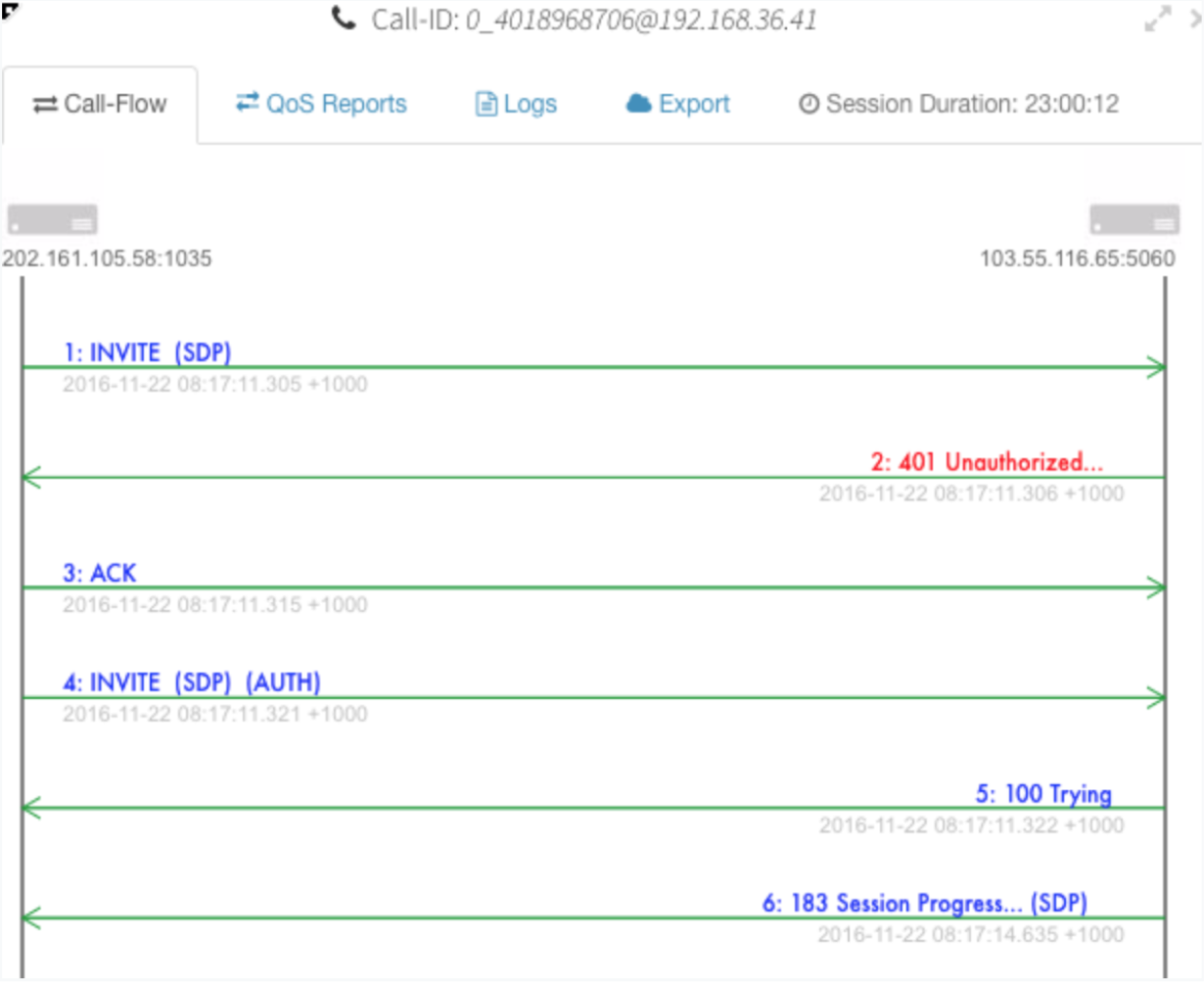
The 401 response is part of the authentication process during registration. Your system sends a registration request, SIPcity responds with a 401 challenge, and your system must return the correct authentication credentials (MD5-encrypted password) to proceed.
The server understood the request but refused to process it, usually due to misconfiguration or insufficient account credit.
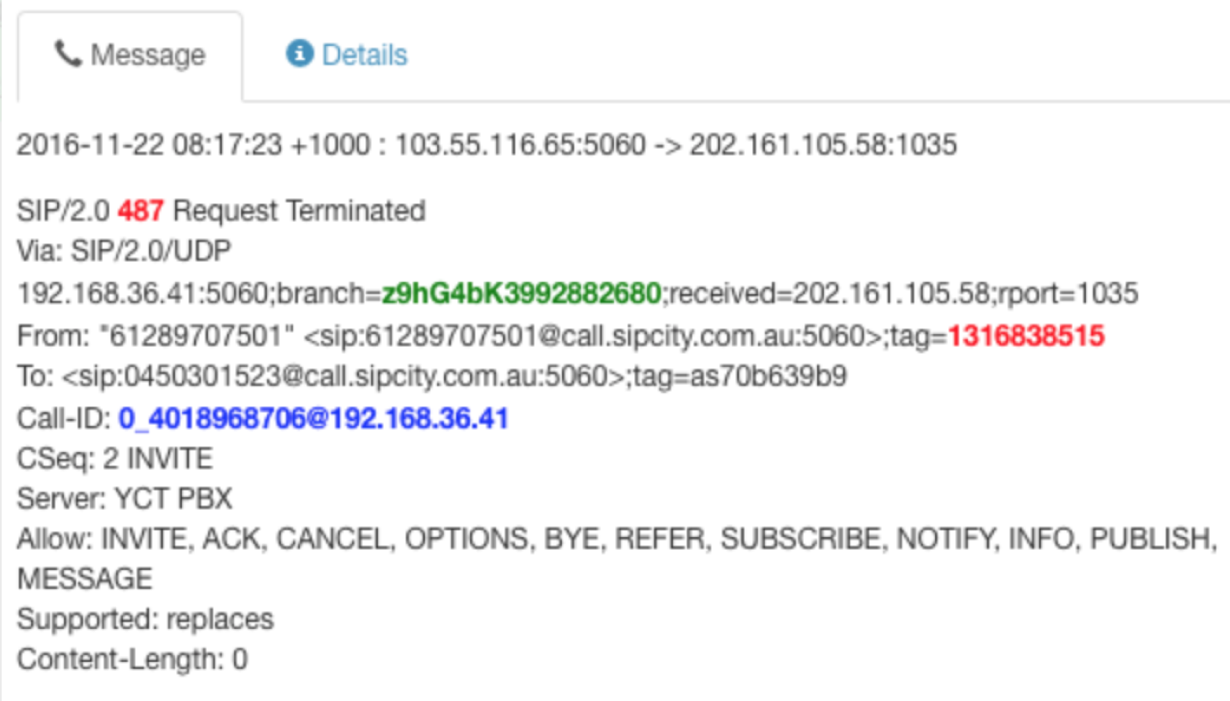
The calling party cancelled the call before it was answered. The 487 indicates the call termination.
SDP (Session Description Protocol) extensions in the application/SDP header describe the media capabilities the calling party can receive or negotiate.
v=0 – Version Number
o=CiscoSystemsCCM-SIP 811669 1 IN IP4 10.105.40.14 – Origin
s=SIP Call – Call Subject
c=IN IP4 10.133.92.102 – Connection/IP address for RTP stream
t=0 0 – Time
m=audio 25268 RTP/AVP 18 101 – Media
a=rtpmap:18 G729/8000 – Attributes (media)
a=ptime:20 – Attributes (Packetisation)
a=rtpmap:101 telephone-event/8000 – DTMF attributes
a=fmtp:101 0-15 – DTMF tones
m=audio 25268 RTP/AVP 18 0 8 101
This line defines the media attributes for the call:
18 = G729
0 = PCMU
8 = PCMA
101 = RTP-NTE payload
When a user agent client (UAC) creates a SIP request, it must insert a Via header. The Via header identifies the protocol (SIP), version (2.0), transport type (UDP or TCP), IP address, and port (typically 5060). This allows the receiving server to return responses to the correct device.
Example:
Via: SIP/2.0/UDP 10.11.228.67:5060
Source: Andrew Prokop – SIP Adventures
1xx = Info SIP Responses
2xx = Success Responses
4xx = Request Failures
5xx = Server Errors
6xx = Global Failures