








SIPcity vs Dialpad Australia: Executive Comparison
Data sovereignty, regulatory compliance, pricing transparency, and support, are all critical factors Australian executives must consider beyond features and headline pricing.

Data sovereignty, regulatory compliance, pricing transparency, and support, are all critical factors Australian executives must consider beyond features and headline pricing.

A risk-focused comparison covering data sovereignty, compliance, pricing predictability, support quality, and performance, helping Australian leaders choose control over offshore complexity.

Commander is gone. SIPcity is the Australian-owned Commander alternative businesses trust for reliable voice communications, transparent pricing, and expert local support.

Many Australian businesses experience poor call quality and high costs with Aircall. Learn why SIPcity is the preferred Aircall alternative, delivering better performance, great support, and over 75% cost savings.

HubSpot CRM goes beyond contact management. Learn how Australian businesses use HubSpot with SIPcity’s VoIP and Cloud PBX to improve visibility, collaboration, and customer experience.

HubSpot CRM VoIP integration helps Australian businesses centralise calls, automate logging, and gain deeper customer insights. Learn how SIPcity turns HubSpot into a powerful communication and growth platform.

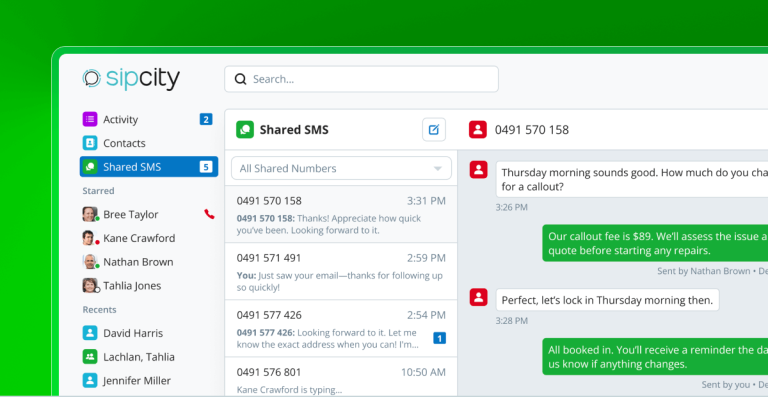
Team text messaging transforms customer service by enabling shared conversations, faster responses, and consistent communication. Learn how Australian businesses use SIPcity to collaborate professionally on customer SMS.

SIPcity’s shared SMS service lets Australian teams send and receive texts from one business number, enabling true collaboration, searchable history, and professional customer messaging via VoIP.

For Australian community and NDIS organisations, communication technology is now mission-critical. Here are the seven challenges providers face — and how to build a more reliable, secure system.
At SIPcity, we’ve dedicated years to assisting Australian businesses in optimising their telecommunications. Today, I’d like to discuss a feature